Ask any local angler about their favorite time to fish Cape Coral and a lot of them will quietly tell you: fall. The summer heat backs off, the crowds thin out, and the fish — fattened up on a summer’s worth of baitfish — go on the hunt. With more than 400 miles of canals at your doorstep and the rich waters of Pine Island Sound and the Caloosahatchee River a short run away, fall fishing in Cape Coral is about as good as inshore Florida gets.
Here’s what’s biting from September through November, where to find it, and how to make the most of the season — whether you’re casting from your rental’s dock or booking a guide.
Why Fall Is Prime Time
A few things line up beautifully in fall. Cooler mornings make the fish more active and make you more comfortable on the water. The baitfish that hatched in spring have grown big and plump over the summer, so predators are feeding aggressively to bulk up before winter. And the snowbird crowds haven’t fully arrived yet, so the water is quieter. October in particular is a local favorite — often one of the most productive months of the entire year — as redfish school up and move into the shallows. Add in pleasant air temperatures and you’ve got the makings of some of the best fishing days you’ll have all year.
What’s Biting This Fall
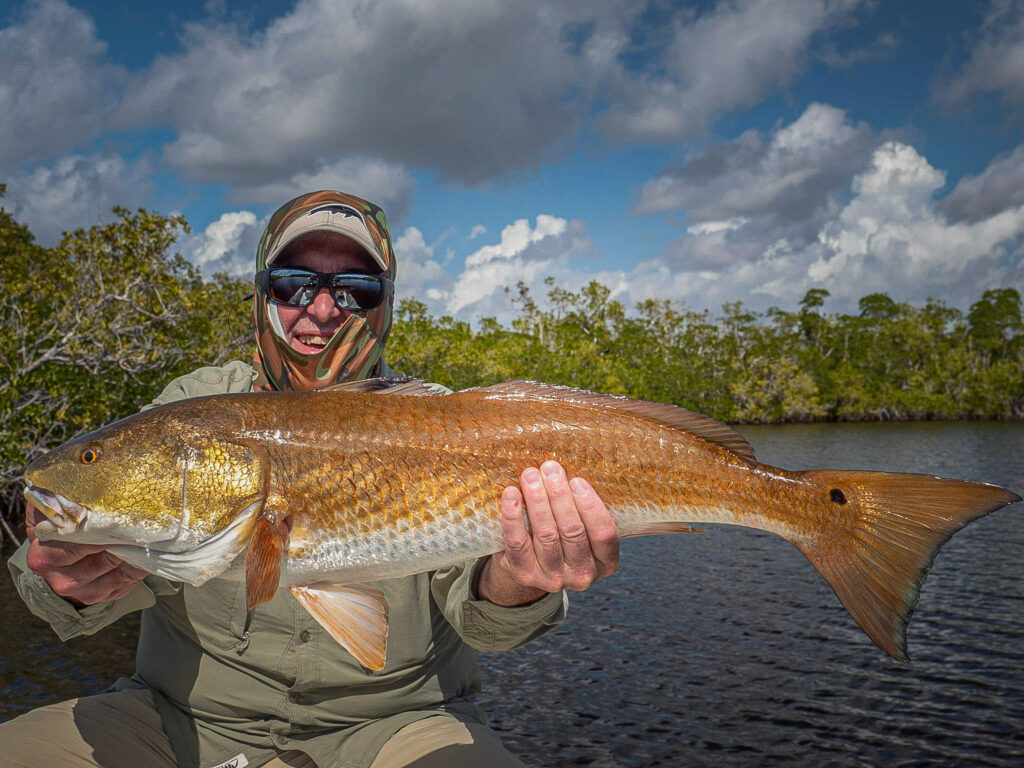
Redfish — the fall headliner. If fall has a star, it’s the redfish. They school up along shorelines and push into the shallow flats and backwaters, and the bigger “bull” reds move into the estuaries this time of year. Look for them around docks, oyster bars, and mangrove edges, and keep an eye out for tailing fish on the flats — sight-fishing a tailing redfish is one of the great thrills of inshore angling.
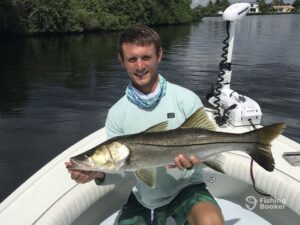
Snook — fat and feeding. Snook spend the fall fattening up before the cooler months, which makes for a strong bite along mangrove edges, around dock pilings, and at creek mouths and passes. They’re a hard-fighting favorite and abundant throughout the area’s mangrove shorelines.
Spotted seatrout — back on the flats. As the water cools, seatrout get more active, especially in the low-light hours. Work the shallow grass flats early in the morning with live shrimp or soft plastics and you’ll often find them in good numbers.
Tarpon — catch them early. The famous spring and summer tarpon migration is winding down by fall, but early in the season you can still find rolling fish, particularly in the river and around the passes in the evening. By late fall the big ones have mostly moved on — so if a tarpon’s on your list, go early.
The supporting cast. Fall and the start of winter also bring excellent action on mangrove snapper, sheepshead, black drum, jack crevalle, and Spanish mackerel — plenty to keep a line tight on any given day.
Freshwater, too. Don’t forget Cape Coral’s interior. The freshwater canals and lakes (like Lake Kennedy) hold largemouth bass, peacock bass, bluegill, and crappie, and the bass fishing only improves as the water cools through the season.
Where to Drop a Line

Right from your dock. One of the joys of a Cape Coral stay is that the fishing starts at your own seawall. What you’ll catch depends on your canal: a gulf-access (saltwater) canal can produce snook, redfish, snapper, sheepshead, and trout, while a freshwater canal is your spot for bass and panfish. (If you’re not sure which type your rental sits on, our guide to gulf-access vs. freshwater canals breaks it down.) Keep in mind that while fishing off your own rental dock is allowed, public fishing may require permits. Never fish off of someone else’s dock.
The Caloosahatchee River. The brackish reaches of the river hold snook, tarpon, and largemouth bass, with endless structure and depth changes to explore.
The sounds, passes, and flats. A short run gets you to Pine Island Sound, Matlacha Pass, and San Carlos Bay — prime inshore grounds of mangrove islands, oyster bars, and grass flats loaded with redfish, trout, and snook. The waters around Sanibel and Captiva, with their miles of mangroves, are legendary snook territory.
Tips for Fall Success
- Fish the low light. Early morning and the hour before dusk are your best windows — fish feed harder when the sun’s low.
- Work a falling tide. Set up near creek mouths and outflows on a falling tide; gamefish stack up to ambush the bait getting swept out.
- Match the bait. Live pilchards, pinfish, mullet, and shrimp are hard to beat, but soft-plastic jigs and topwater lures shine in fall when fish are aggressive.
- Hunt the structure. Docks, mangrove edges, oyster bars, and seawalls all hold fish — work the edges, not the open middle.
Licenses and the Rules of the Game
Before you cast, two essentials. First, you’ll need the appropriate Florida fishing license — saltwater, freshwater, or both, depending on where you fish (it’s quick to buy online, and most charters include it for their guests). Second, and importantly: fishing regulations here change, and they vary by zone and season. Snook and redfish in particular have specific seasons, size “slot” limits, bag limits, and permit requirements that are updated regularly — and the rules for keeping a fish can differ from one stretch of water to the next.
Because of that, always check the current rules with the Florida Fish and Wildlife Conservation Commission before you keep anything. Many local anglers practice catch-and-release for prized species like snook, redfish, and tarpon anyway — it keeps the fishery healthy for the next season and the next generation. Handle fish gently, keep them wet, and let the big breeders swim off to do their job.
Cast Off Right From Your Dock
You don’t need a boat of your own to have a great fall on the water. Many local guides will pick you up right at your rental’s dock, and Cape Coral’s calm canals and short runs make it one of the most family-friendly places around to put a kid on their first fish. Whether you’re a serious angler chasing a personal-best redfish or a family looking for a fun morning with something always willing to bite, fall is the time and Cape Coral is the place.
The Bottom Line
Cooler mornings, hungry fish, and quiet water make fall one of the best-kept secrets of the Cape Coral fishing calendar. Grab your license, check the current regulations, pick your tide, and get out there — the redfish are waiting.
Staying with us this fall? Many of our rentals put a dock and a fishing spot right outside your door. Reach out and we’ll help you find a home that fits your fishing plans — and point you toward the guides and ramps nearby.
Keep planning: learn the difference between gulf-access and freshwater canals (it determines what you’ll catch from your dock), see the local wildlife you’ll spot on the water, and browse more things to do while you’re here.