There are few Florida experiences quite like watching a manatee surface a few feet away — a thousand pounds of gentle, whiskered calm, rising for a breath before drifting back below. They’re often called sea cows, but “gentle giant” gets closer to the truth. And here’s the good news if you’re planning a trip: some of the best viewing of manatees in Cape Coral and the surrounding area is right on your doorstep, and the season is just around the corner.
Here’s everything you need to know to see them — when they arrive, the best spots near Cape Coral, and how to watch these protected animals the right way.
Why Winter Is Manatee Season
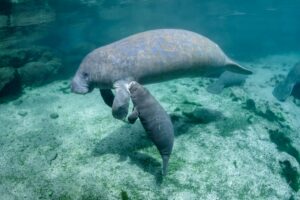
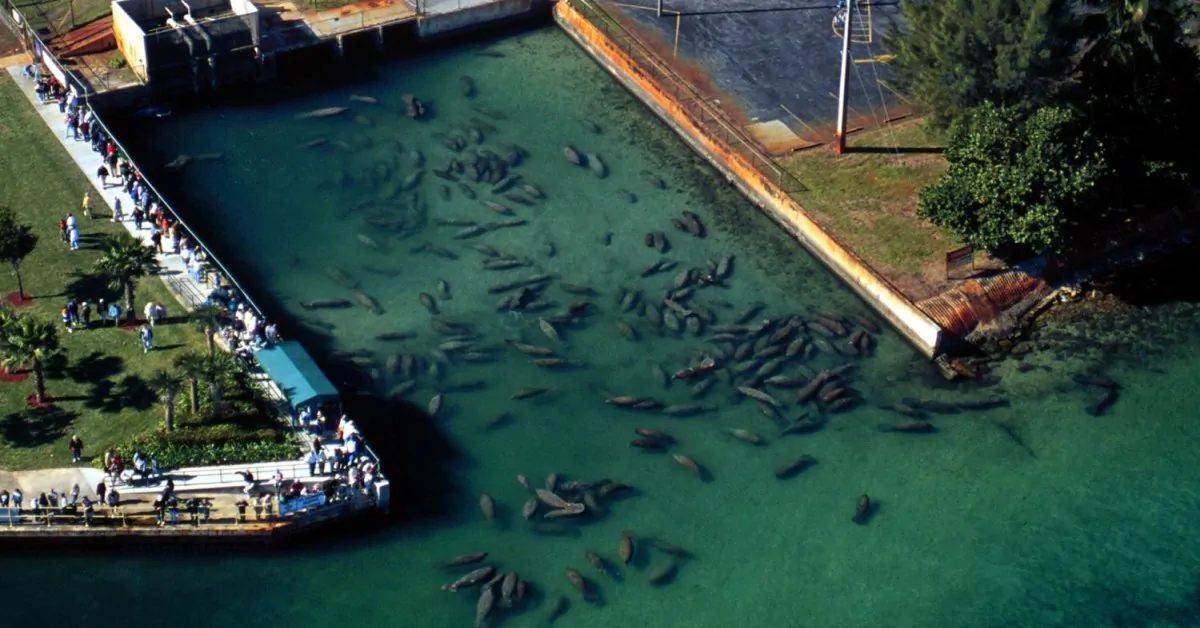
Manatees can’t handle the cold. They need water above about 68°F to stay healthy, so when the Gulf of Mexico cools off in the winter, they leave the open coast and crowd into warm-water refuges — natural springs and the warm outflows around power plants — to wait out the chill.
That’s exactly what makes winter the season to see them. From roughly November through March, manatees gather in predictable, sheltered spots in large numbers, often surfacing frequently and lingering for hours. The colder the snap, the better the viewing: the deepest cold fronts of mid-December through February tend to bring the biggest gatherings. In the warm months they disperse back into the bays and estuaries and become much harder to find — so if a manatee encounter is on your wish list, timing your visit for winter is the single most important thing you can do.
It’s also worth saying plainly: this is a real reason to consider a winter stay. Manatee season lines up perfectly with snowbird season, so the same trip that gets you out of the northern cold gets you front-row seats to one of Florida’s most beloved animals.
Where to See Manatees in Cape Coral
Sirenia Vista Park: See Manatees in Cape Coral
The best place to see manatees in Cape Coral itself sits in the northwest part of the city. Sirenia Vista Park is a quiet, free, canal-side park where manatees glide through the water — especially on the east side — to feed on seagrasses in the warm shallows. It’s low-key, rarely crowded, and an easy, no-cost outing on a cool winter morning. Bring a pair of polarized sunglasses to cut the glare and you’ll spot them far more easily.
Lee County Manatee Park (Fort Myers)
If you want the near-guarantee, make the short drive to Manatee Park in Fort Myers — one of the best manatee-viewing spots in Southwest Florida. This 17-acre park sits right on a warm-water discharge canal beside a Florida Power & Light plant, and on cold days manatees pack into that warm water in remarkable numbers.
It’s purpose-built for watching them: paved pathways and a boardwalk follow the canal to several covered viewing platforms with seating and telescopes, so everyone gets a good look. There’s also a visitor center, a butterfly garden, picnic shelters, and kayak and canoe rentals if you’d like to get out on the Orange River (guided tours are available, and volunteer naturalists are often on-site during peak season). Parking runs a couple of dollars an hour or around five for the day, and the park is open daily from morning to sunset. Note that dogs aren’t permitted, except service animals.
A handy trick: Manatee Park has a live webcam, so you can check whether the manatees are in before you even leave your rental.
Seeing Manatees by Kayak
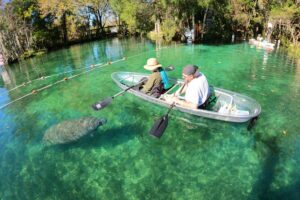
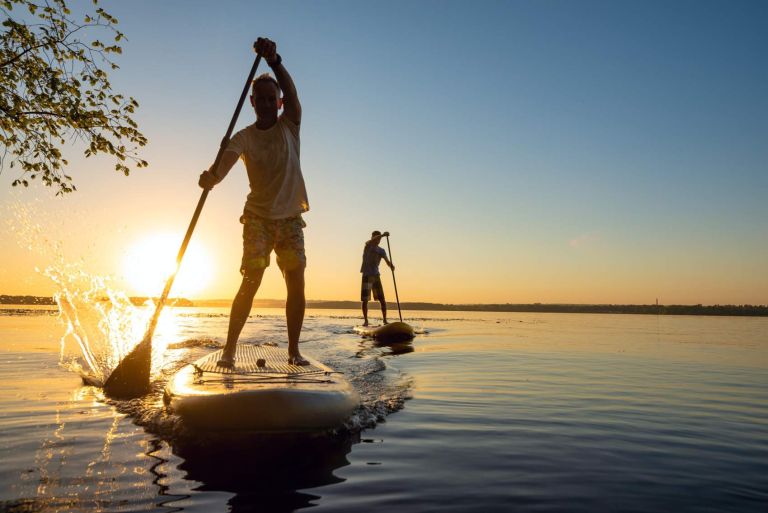
Cape Coral’s canals themselves are prime manatee territory in the cooler months, and seeing one from a kayak or paddleboard — quietly, at water level — is unforgettable. You can paddle from Manatee Park, explore the canals near your rental, or head to nearby Lovers Key State Park, which offers excellent, less-crowded kayaking where curious manatees sometimes linger. Plenty of local outfitters also run guided wildlife tours that go looking for manatees, dolphins, and more.
How to Watch Manatees the Right Way
Manatees are protected under both Florida and federal law, and the rules exist because these animals are genuinely vulnerable — their biggest threat is boat strikes, and you’ll often see healed propeller scars on their backs. Watching responsibly keeps them safe and keeps the experience legal:
- Keep your distance and observe passively. Don’t chase, pursue, corner, or try to touch them. Let them come and go on their own terms.
- Never feed them or give them water. It’s illegal, and it teaches them to associate people and boats with food — which draws them into danger.
- If you’re boating, go slow. Obey all no-wake and manatee zones, and keep a sharp lookout. A few seconds of caution can save a life.
- If one approaches you while you’re in the water, stay still and let it pass. Don’t grab on or follow.
Note that you can’t legally swim with manatees here the way you can at a few spots in central Florida — and that’s fine. From a viewing platform, a quiet kayak, or the bank at Sirenia Vista, you’ll get all the magic without disturbing them.
A Few Tips for a Great Visit
Go on the cool mornings right after a cold front — that’s when the manatees pile in. Dress in layers (Florida “cold” is mild, but mornings can be brisk by local standards), bring polarized sunglasses to see beneath the surface, pack patience and a camera, and check the Manatee Park webcam before you head out. And keep an eye on the water even when you’re not “manatee watching” — in winter, a slow drift of gray in the canal behind your rental might just be a sea cow passing through.
Staying with us in Cape Coral this winter? You’re minutes from Sirenia Vista and a short drive from Manatee Park — manatee season is one of the quiet perks of a cool-season stay. Ask us and we’ll tell you where they’ve been spotted lately.
Want more? See our full Cape Coral wildlife guide for everything else you’ll see while you’re here.