

The holidays have a way of sneaking up. One minute you’re thinking “we should really get away somewhere warm this year,” and the next it’s late fall, the calendar’s filling in, and you haven’t booked a thing. Sound familiar? Take a breath — you haven’t missed your window. There’s still last-minute Cape Coral holiday rental availability out there, but the homes are going fast, and the time to act is right now.
Here’s how to find a great last-minute holiday escape in Cape Coral and lock it in before someone else does.
Good News: It’s Not Too Late
Late planners, this part’s for you. Even close to the holidays, waterfront rentals do open up. Plans change, cancellations happen, and owners release dates as the calendar firms up — which means availability shifts day to day. A home that was booked last week might be open today. Cape Coral still has options for travelers ready to move quickly, and you can absolutely still spend this holiday somewhere warm, sunny, and on the water.
But Don’t Wait Too Long
Now the honest part: the clock is ticking. The most sought-after homes — the waterfront houses with pools that everyone wants for the holidays — are the first to go, and every day that passes, the pool of available rentals shrinks. The tightest dates of all are the peak stretches: Thanksgiving week, the days around Christmas, and New Year’s. If your heart’s set on those, you’ll want to reach out today, not next week.
How to Lock In a Last-Minute Holiday Stay
A few smart moves dramatically improve your odds of landing a great home on short notice.
Be Flexible With Your Dates
Flexibility is your single biggest advantage when booking late. The shoulder dates right before and after the peak holidays often have more openings — and better rates. Arriving a couple of days earlier or staying a little past New Year’s can open up homes that are otherwise booked solid. Even a one- or two-day shift can be the difference between “sorry, that’s taken” and “you’re all set.”
Widen Your Net
Stay open on the home itself. If a specific neighborhood or an exact feature list is booked up, loosening one or two must-haves gives you far more to choose from. A gulf-access canal instead of a specific street, or a three-bedroom instead of a four, might be the home that’s actually available — and still perfect for your trip.
Reach Out Directly and Fast
Don’t just scan listings and assume what you see is everything. Contact us directly and tell us what you need. Hosts often know which dates are about to free up, can flag a fresh cancellation the moment it happens, and can match you to a home that fits before it’s publicly snapped up. A quick message can surface options you’d never find on your own.
Have Your Details Ready
When availability moves this fast, the booking goes to whoever’s ready. Have your specifics on hand — your dates, your party size, and your handful of true must-haves — so that when the right home appears, you can confirm it immediately instead of losing it while you check with everyone.
Why a Cape Coral Holiday Is Worth the Scramble

In case you need the nudge to act: a Cape Coral holiday is worth moving fast for. Picture Christmas morning in shorts by the pool. Picture the whole family together in a real home with a full kitchen for the feast, palm trees in twinkle lights, and boats gliding by decked out for the season. It’s warm, it’s festive, and it’s a world away from a cold, gray holiday back home. A little hustle now buys you all of that.
Lock It In Before It’s Gone
The holidays are almost here, the warm weather is calling, and the right home is still out there — but not for long. Don’t let another season slip by wishing you’d booked. Reach out today, and let’s find you a place to call home for the holidays before the calendar fills.
Ready to make it happen? Send us your dates and your wish list right now, and we’ll tell you what’s still available for the holidays — and help you lock it in before someone else does.
Planning the trip: see our full guide to a Cape Coral holiday, the best things to do while you’re here, and where to spot manatees during your winter stay.
Plenty of Florida towns promise wildlife and then hand you a parking lot and a hopeful pair of binoculars. Cape Coral is different. With more than 400 miles of canals, thousands of acres of preserves, and a famous little owl that nests right in the front yards of ordinary neighborhoods, this is a place where you don’t have to get lucky to see something wonderful — you just have to know where to look.
This isn’t a list of rare creatures you’ll probably never spot. It’s a realistic guide to the wildlife you can genuinely expect to encounter on a Cape Coral trip, where to find each one, the best time of year to look, and how to watch respectfully so these animals stay wild and safe.
The Burrowing Owls (Yes, Really in the Neighborhoods)
If Cape Coral has a mascot, it’s the burrowing owl — the city’s official bird, and the one creature you should make a point of seeing. Cape Coral is home to the largest population of Florida burrowing owls anywhere in the world, with thousands of birds and well over 2,000 burrows scattered across the city.
What makes them so easy to see is that, unlike almost every other owl, they’re active during the day and they nest underground in open, sandy lots — often right in established neighborhoods. They’re tiny (about 9 inches tall, with long legs and bright yellow eyes), endlessly photogenic, and frequently found standing sentry on a perch beside their burrow.
Where to look: Drive slowly through the residential streets of southwest Cape Coral and watch for burrows marked with white PVC stakes and small cross-perches — the city marks known nests to protect them. Rotary Park also runs guided tours during the season, and the City of Cape Coral will provide a map of recommended public viewing spots if you email the wildlife office.
When: You can see owls year-round, but nesting season (roughly mid-February through early July) is the most active and rewarding, with fluffy owlets emerging from the burrows in spring. Early morning, about half an hour after sunrise, and the last 90 minutes before sunset are the golden windows.
Watch responsibly: This matters. Burrowing owls are a protected species, and harassing them is against the law. Keep at least 30+ feet back, never approach or linger at a burrow, never feed them, and stay off private lawns. If an owl starts bobbing its head, that’s not a greeting — it’s stress, and your cue to back away. The locals are fiercely protective of their owls, and rightly so.
Bonus for winter visitors: The annual Cape Coral Burrowing Owl Festival takes over Rotary Park each year in late February — a family-friendly celebration with guided tours, expert talks, and conservation booths. Worth planning around if you’re here in season.
Dolphins (Year-Round, Right in the Canals)
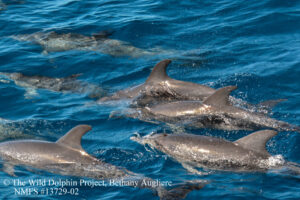
Bottlenose dolphins are residents of the local waterways, and they’re one of the most reliable sightings on this whole list — no special season required. You’ll often spot them surfacing in the canals, around the river mouth, and out in the Gulf, frequently riding the wake behind boats.
Where & when: A morning dolphin-watching cruise (find some recommendations in our Local Attractions Guide) is the surest way to see them up close, but patient watchers spot them from docks, waterfront restaurants, and bridges too. Any time of year works.
Manatees (Worth Timing Your Trip For)

Manatees are the gentle giants everyone hopes to see — and here’s the honest truth that most guides skip: they’re a cool-season animal here. When Gulf water temperatures drop in the winter, manatees crowd into warmer spots, which is when and where you’re almost guaranteed to find them. In the warm summer months they disperse and become much harder to spot.
Where: Sirenia Vista Park in Cape Coral is a local manatee-viewing spot, and Manatee Park in nearby Fort Myers — sited beside a warm-water outflow — is one of the most dependable manatee-watching places in the region.
When: Roughly December through March, on the coldest stretches especially. If manatees are at the top of your list, that’s a real reason to consider a winter visit. (We go deeper on this in our dedicated manatee-season guide.)
Wading Birds and the Preserve Regulars
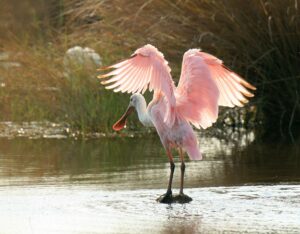
Even if you’re not a “birder,” Cape Coral’s birds are hard to miss and genuinely beautiful. The star is the roseate spoonbill — flamingo-pink and unmistakable — but you’ll also routinely see great blue herons, snowy egrets, white ibis stalking across lawns, ospreys overhead, anhingas drying their wings on canal banks, and pelicans diving offshore.
Where: The boardwalk at Four Mile Cove Ecological Preserve winds through mangroves along the Caloosahatchee and is excellent for spotting wading birds, especially around low tide. Rotary Park is a designated stop on the Great Florida Birding Trail and adds trails, an observation tower, and the Tom Allen Memorial Butterfly House. Both are free.
When: Year-round, with cooler months bringing the biggest variety as migratory species pass through. Early morning is best.
Alligators (Keep a Respectful Distance)

This is Florida, so yes — alligators live here too, mostly in the freshwater canals, ponds, and preserves rather than the salty gulf-access waters. Seeing one sunning on a bank is a classic Florida moment, and perfectly safe as long as you follow the cardinal rules: keep your distance, never feed them (it’s illegal and dangerous, as it teaches them to associate people with food), and keep pets and small children away from the water’s edge in freshwater areas, especially at dawn and dusk.
Where & when: Freshwater preserve edges and quiet canal banks; most active in warmer months.
A Few Lucky Extras
Spend enough time outdoors here and you may add some bonus sightings: gopher tortoises, a threatened keystone species that shares the same dry, sandy habitat as the owls; bald eagles, which nest in the area (Southwest Florida is home to several famous, closely-watched nesting pairs); and, on the Gulf beaches a short drive away, sea turtle nesting season runs through the summer and into fall, with marked nests along the dunes.
The Golden Rule of Watching Wildlife Here
Everything on this list survives because people give it room. A few principles cover almost every situation: keep a generous distance, never feed any wild animal, don’t block traffic or trespass on private property to get a photo, use a zoom lens instead of stepping closer, and if an animal changes its behavior because of you, you’re too close. Watching wildlife well means leaving no trace that you were ever there — which is exactly what keeps these encounters possible for the next visitor, and the next generation of owls.
Staying with us in Cape Coral? A surprising amount of this is within a few minutes of our rentals — burrowing owls a short drive away, dolphins in the canals, herons on the seawall at sunrise. Ask us and we’ll point you toward what’s being seen near you this week.
Keep exploring: see our full manatee-season guide for the best winter viewing, and our Cape Coral family vacation guide for more ways to fill your trip.
<!– INTERNAL LINKS TO ADD ONCE LIVE: – “Cape Coral family vacation guide” (Oct pillar post) –>
Some Florida destinations are built for spring breakers, others for retirees. Cape Coral, almost by accident, turned out to be built for families. Its quiet, spread-out neighborhoods, hundreds of miles of calm canals, big waterfront homes with private pools, and an easygoing pace make it one of the most comfortable, least-hectic places in Southwest Florida to bring kids. There’s no boardwalk chaos, no traffic-choked strip — just sunshine, water, wildlife, and room to breathe.
If you’re planning a trip to Cape Coral with kids, this guide covers everything: why it works so well for families, where to stay, how to get around, the best things to do (rain or shine), where to find a beach, and how to choose the right time of year. Consider it your home base for planning the whole trip.
Why Cape Coral Is Great for Families
A few things set Cape Coral apart for family travel. It’s residential at heart, so you’re staying in real neighborhoods rather than a tourist district — which means more space, more quiet, and a safer-feeling environment for kids to ride bikes and play. The waterfront is the main attraction, and it’s the calm, protected kind: canals and the river rather than crashing surf, ideal for young swimmers, paddlers, and first-time boaters.
It’s also a fantastic home base. Cape Coral sits within easy reach of Sanibel and Captiva, the beaches of Fort Myers, wildlife refuges, and more — so you can have a different kind of day every day without a long drive. And because it’s a vacation-rental town rather than a resort strip, families get more room and more value: a whole house with a kitchen and a pool often costs less than cramming everyone into hotel rooms.
Getting There and Getting Around
Most families fly into Southwest Florida International Airport (RSW) in Fort Myers, about a 30–45 minute drive from most of Cape Coral. Punta Gorda (PGD) to the north is a smaller alternative served by budget carriers.
One thing to plan for: you’ll want a rental car. Cape Coral is enormous — one of the largest cities by land area in Florida — and it’s spread out, with attractions, beaches, and day trips all reached by car. Public transit is minimal, so budget for a vehicle and bring or rent car seats as needed. The upside is that everything’s an easy, low-stress drive once you’re set up.
Where to Stay with Kids
This is where Cape Coral really shines for families. A private vacation rental home gives you what hotels can’t: separate bedrooms so kids and parents aren’t on top of each other, a full kitchen for easy breakfasts and picky eaters, a laundry room for sandy clothes, and — the big one — your own private pool, often heated, right out the back door on the water.
When choosing a rental for a family trip, a few things are worth prioritizing: a screened pool cage (shade and bug protection), a fenced or safely-arranged pool area if you have little ones (you can filter homes with this if it’s important!), gulf-access or canal frontage if you want to get out on the water, and enough beds and bathrooms that nobody’s fighting over them. A waterfront home where the kids can spot fish and birds from the lanai while you have your morning coffee is the quintessential Cape Coral family experience.
Things to Do Outdoors and on the Water
Sun Splash Family Waterpark is the headline attraction — the largest waterpark in Southwest Florida, with everything from gentle play areas and a lazy river for little ones (the Tot Spot has floating alligators and a kiddie playland) to genuinely thrilling slides for big kids and teens. Note that it’s a warm-season park, generally open spring through summer and closed in winter, so it’s a perfect rainy-is-not-an-issue-here summer day. Weekdays are less crowded.
A newer option, just a short drive away in neighboring North Fort Myers, is Brightwater Lagoon — a six-acre, man-made lagoon with crystal-clear blue water and sandy beaches, billed as a beach day without the drive to the Gulf. It’s open to the public with day tickets (you don’t need to be a resident), and the family-friendly amenities include a waterslide, a floating inflatable obstacle course, a splash pad for little ones, and kayak and paddleboard rentals — plus shaded cabanas, beach loungers, food, and a swim-up bar for the grown-ups. It’s cashless and parking is free; check current ticket pricing online before you go, and watch for the Florida-resident discount if it applies to you.
Four Mile Cove Ecological Preserve is consistently rated Cape Coral’s top attraction, and it’s free. A boardwalk winds through 365 acres of mangroves along the river, with kayak rentals if you want to paddle the mangrove tunnels — a gentle, kid-friendly adventure with great odds of spotting birds and fish.
Out on the water, a dolphin and wildlife boat cruise is a near-guaranteed family hit; several operators run relaxed, kid-friendly trips through the canals and out toward the islands. If your family is more independent, rent kayaks or paddleboards and explore the calm canals yourselves. And for skater kids, the Eagle Skate Park is one of the largest skate facilities in the region, open to ages six and up with helmets required.
Rainy-Day and Indoor Fun

Afternoon thunderstorms are part of the rhythm here, especially in summer — but they’re no problem, because Cape Coral is loaded with indoor fun:
- HeadPinz Family Entertainment Center — bowling, laser tag, a ropes course, and an arcade under one roof.
- Mike Greenwell’s Bat-A-Ball & Family Fun Park — mini-golf, batting cages, four go-kart tracks, and arcade games.
- Happy’s Family Fun Center — arcade, rides, and unlimited-play admission that’s easy on the wallet for younger kids.
- Escape the Cape — themed escape rooms, ideal for older kids and teens who love a challenge.
- Cape Coral Historical Museum — small, hands-on, and a cool, low-cost way to learn the surprising story of how the city came to be (kids under 12 are typically free).
A short drive into Fort Myers adds even more, including the Imaginarium Science Center, an interactive science museum with hands-on exhibits, marine touch tanks, and live animal encounters that kids love.
Wildlife Kids Will Actually See
Cape Coral is a genuinely great wildlife destination for families, and the encounters here are reliable rather than wishful. The city is home to the world’s largest population of burrowing owls — tiny, charismatic, active during the day, and nesting right in neighborhood lots, so you can spot them on an easy morning drive (just keep a respectful distance). Dolphins cruise the canals year-round. And in winter, gentle manatees gather in warm-water spots like Sirenia Vista Park right in town. Watching wildlife is one of the best free, screen-free things you can do here as a family — and a great teaching moment about respecting animals in the wild.
Beach Days and Day Trips

Here’s an honest quirk worth knowing: Cape Coral itself sits on the Caloosahatchee River, not directly on the Gulf, and its main public beach at the Yacht Club is currently in the middle of a major multi-year redevelopment. So for a classic beach day, families make the short, scenic drive to the Gulf beaches nearby — and they’re some of the best in the country.
Sanibel and Captiva are the crown jewels: calm, shallow, family-friendly water and the best shelling anywhere, with the kid-favorite “Sanibel Stoop” of hunting for treasures in the sand. Fort Myers Beach offers a livelier, classic beach-town vibe, and Lovers Key State Park is beautiful for gentle kayaking and quiet shoreline. For trip-planning ideas and current beach details, the area’s official tourism site at Visit Fort Myers is a useful resource. We’ve also got a full Sanibel & Captiva day-trip guide to help you plan the perfect island day.
The Best Time to Visit Cape Coral with Kids
The right season depends on your family’s priorities:
Winter (roughly December–April) is peak season for a reason: warm, dry, comfortable days, manatee season in full swing, and zero hurricane worry. The trade-offs are higher rates, bigger snowbird crowds, and Sun Splash being closed. It’s ideal for a holiday-break or spring-break trip.
Summer (May–November) brings hot, humid days with a near-daily afternoon thunderstorm that rolls through and clears — but also Sun Splash at full tilt, far smaller crowds, and noticeably lower rates. Plan water and outdoor fun for the mornings and keep an indoor option ready for the storm. It overlaps hurricane season, though serious storms are the exception and you’ll always have days of warning; if that’s on your mind, our honest guide to visiting during hurricane season walks through exactly what to expect.
The sweet spots are the shoulder edges — late spring and November — when you get good weather, lower prices, and fewer crowds all at once.
A Few Family Travel Tips
- Sun protection is non-negotiable. The Florida sun is strong even in winter. Reef-safe sunscreen, hats, and rash guards for the kids; reapply often.
- Mind the water — both kinds. Watch little ones around the pool and canals, and remember that freshwater canals and ponds can host alligators, so keep kids and pets back from the water’s edge, especially at dawn and dusk. Gulf-access saltwater canals are not gator territory, but supervision is always smart.
- Embrace the morning. Beat the heat and the storms by front-loading your big outdoor plans early in the day.
- Pack for water. Swimsuits, water shoes, a dry bag, and a cooler will all earn their keep.
- Build in downtime. Half the joy of a Cape Coral trip is an unhurried afternoon by your own pool. You don’t have to fill every day.
Start Planning Your Cape Coral Family Trip
Cape Coral rewards families who like their vacations relaxed, spacious, and full of water and wildlife rather than crowds and lines. With a private home as your base, a different easy adventure every day, and the Gulf’s best beaches a short drive away, it’s a place kids remember and parents actually find restful.
Ready to plan? Take a look at our waterfront rentals and reach out with your dates — we’re always happy to point families toward what’s best for the ages and interests of your crew.
Keep planning with our other guides: things to do in summer, the complete wildlife guide, manatee season, the Sanibel & Captiva day trip, and visiting during hurricane season.
You can feel it the moment it happens — the first cool front slides through, the humidity drops away, and the air turns soft, bright, and perfect. That’s the signal up and down Southwest Florida: snowbird season has begun. As the north braces for gray skies and the first snow, Cape Coral is easing into the most beautiful stretch of its entire year. And if you’ve been dreaming of trading winter for sunshine, there’s no better place to land than right here. A Cape Coral winter rental puts you at the center of it all — and the season is starting now.
The Season Is Here
This is the turn snowbirds wait for. From now through spring, Cape Coral settles into warm, dry, sunny days and cool, comfortable evenings. It’s the kind of weather that makes you want to be outside from morning coffee to sunset. The city comes alive with it. Farmers markets and seasonal events fill the calendar, the tiki bars hum again, and the early snowbirds roll back in. Out on the water, manatee season is just around the corner, with the gentle giants beginning to gather in the warm canals. The whole place shifts into its best self, and it happens right about now.
Why Cape Coral Makes the Perfect Winter Home Base

Plenty of Florida towns offer winter sun. What makes Cape Coral the ideal home base for a long, easy season is the way it combines things no single other place quite matches.
Life on the Water
With more than 400 miles of canals — the most of any city in the world — Cape Coral is built for people who love the water. Keep a boat at your dock, fish off the seawall, kayak at sunrise, or just watch dolphins and manatees drift past with your morning coffee. For a lot of snowbirds, this is the whole dream, and here it’s everyday life.
Room to Actually Live
A winter stay isn’t a quick trip — it’s months. A private rental home gives you space to settle in: separate bedrooms, a full kitchen, a laundry room, and your own heated pool out back on the water. You’re not perched in a hotel room; you’re living somewhere, with room for visiting kids and grandkids when they come to escape the cold too.
More for Your Money
Cape Coral stretches a winter budget further than glitzier neighbors like Naples. The same money that gets you a condo elsewhere often gets you a whole waterfront house here — which is a big part of why so many snowbirds choose the Cape and come back year after year.
A Central Launch Pad
From here you’re a short drive from the world-class beaches and shelling of Sanibel and Captiva, the culture and dining of Fort Myers, and easy day trips all over the region. You get a quiet home base and everything else within reach.
An Active, Social Winter
This is snowbird country, and the lifestyle is built in. Pickleball and golf are practically a religion here, plus biking, fishing, boating, and farmers markets. Best of all is the friendly community of seasonal residents who make it easy to feel at home fast. There’s as much to do — or as little — as you like.
Calm, Easy Living
And underneath it all, Cape Coral keeps its unhurried, residential, safe-feeling pace. After a lifetime of busy winters, that tranquility is exactly what makes a season here feel like a true exhale.
A Whole Winter to Look Forward To
The best part of arriving now is everything still ahead of you. The holidays here are warm and festive, with palm trees in lights and boats decked out for the famous Holiday Boat-A-Long. Winter is prime time to watch manatees gather in the warm waters, and the cooler months bring some of the best fishing and the most comfortable beach days of the year. There are wildlife to spot, islands to explore, and months of sunshine to fill however you please. A winter in Cape Coral isn’t one nice trip — it’s a whole season of them.
Make This Your Winter — The Time Is Now
Here’s the honest, practical truth: the season is starting, and the best winter rentals are filling fast. The waterfront homes with pools that snowbirds want for the season get booked up as everyone makes the same happy decision to head south. Whether you’re after the entire winter or just a few weeks of escape, the sooner you reserve, the better your choice of homes and dates.
Snowbird season is here. The water’s warm, the weather’s perfect, and Cape Coral is ready for you.
Ready to claim your spot in the sun? Tell us your dates and what you’re looking for, and we’ll help you find the ideal Cape Coral winter rental to call home this season — before the best ones are gone.
Keep planning: see why snowbirds choose Cape Coral over Naples and Fort Myers, our snowbird packing & prep checklist, and where to spot manatees once you’ve settled in.
Packing for a long winter in Florida is a different animal from packing for a one-week vacation. You’re not just throwing swimsuits in a bag — you’re closing up one home, setting up another, and making sure that everything from your medications to your mail runs smoothly for months. Do a little planning up front, and your snowbird season unfolds like a long, easy exhale. Skip it, and you’ll spend your first sunny week on the phone with the pharmacy and the post office.
This snowbird packing list and prep checklist for Florida walks you through all of it, in four parts: buttoning up the home you’re leaving, handling health and documents, packing smart for a Florida winter, and settling in once you arrive. Save it, print it, and check the boxes as you go.
Part 1: Before You Leave Home
The home you’re leaving behind needs almost as much attention as the trip itself — especially if it sits somewhere cold.
- Protect against the cold. Set the thermostat to a safe minimum (many leave it around 55°F to prevent frozen pipes), or shut off and drain the water system if you’re leaving it fully empty.
- Stop or forward your mail. Put your mail on hold or forward it through USPS, and pause newspaper and recurring deliveries. If you’re looking to have your mail forwarded, make sure your rental allows for that. Ask your host, as some homes have a hold on mail delivery since it’s not residential.
- Arrange a house-watcher. Ask a trusted neighbor, friend, or service to check on the house, handle snow removal, and collect any stray packages.
- Secure it. Set light timers, arm your security system and notify the monitoring company you’ll be away, and consider letting a neighbor know your dates.
- Handle the bills. Put utilities and recurring bills on autopay so nothing lapses while you’re gone.
- Deal with the fridge. Use up or toss perishables, and consider emptying and propping the fridge if no one will be home for months.
- Unplug. Switch off and unplug electronics and small appliances to save energy and reduce fire risk.
- Sort out plants and pets. Arrange care for anything living that’s staying behind — or pack them to come along.
Part 2: Health, Medications & Documents
This is the part people most often scramble over once they’ve arrived, so handle it before you go.
- Stock up on prescriptions. Get enough medication for your whole stay, or arrange to transfer prescriptions to a Florida pharmacy. Ask your insurer about a “vacation override” if you need an early or extended fill.
- Check your health coverage. Confirm your insurance works in Florida and look up an in-network doctor and urgent care near your rental before you need one. (Canadian snowbirds: remember that provincial health plans offer limited out-of-country coverage — travel health insurance for the full stay is essential.)
- Carry your medical basics. Insurance cards, a list of current medications and dosages, your doctors’ contact info, and copies of key medical records.
- Bring your important documents. Driver’s license, passport (especially for international snowbirds), and copies of insurance and identification kept separately from the originals.
- Pack a small first-aid kit and any over-the-counter staples you rely on.
Part 3: What to Pack for a Florida Winter
Here’s the thing first-time snowbirds get wrong: a Southwest Florida winter is warm, but it isn’t always warm. Most days are sunny and in the 70s or low 80s, but mornings and evenings can dip into the 50s and 60s, and the occasional cold front can surprise you. Pack for the sunshine — but bring a few cool-weather layers too.
Clothing
- Warm-weather basics: shorts, T-shirts, sundresses, swimwear (bring a few suits — they’re in heavy rotation)
- A few cool-weather layers: a light jacket or two, sweaters or hoodies, long pants, and closed-toe shoes for chillier evenings and that rare cold snap
- A rain jacket or compact umbrella for passing showers
- A couple of nicer outfits for dining out
- Footwear: flip-flops, comfortable walking shoes, and one dressier pair
Sun & water
- Sunglasses, hats, and plenty of reef-safe sunscreen
- Beach towels and a beach bag (though you can also pick these up locally)
Active gear (snowbird favorites)

- Golf clubs, and pickleball or tennis gear — both are enormous in the Cape Coral snowbird scene
- Fishing gear if you have it, plus any boating or kayaking equipment
- A bike, or plan to rent or buy one once you’re settled
Electronics & comforts
- Laptop, tablet, e-reader, phones, and all the chargers
- A streaming stick (like a Roku or Fire Stick) to make the rental’s TV feel like home
- Books, hobbies, a good camera for the wildlife — Cape Coral is a birder’s paradise
A smart packing rule: don’t haul down things you can easily buy or that your rental already provides. Most furnished snowbird rentals come stocked with kitchenware, linens, and basics, and consumables like beach chairs, and pool floats are cheap to buy locally. Ask your host for an inventory of what’s included before you start filling suitcases — it’ll save you a lot of hauling.
Part 4: Settling In Once You Arrive

A little setup in your first few days makes the whole season smoother.
- Confirm the essentials with your host ahead of arrival: check-in details, the Wi-Fi situation, parking, and what’s provided.
- Sort out mail. Set up a way to receive anything important — through your rental’s address (with the host’s okay) or a local mailbox service.
- Stock the kitchen. Plan a big first grocery run so you’re not living on takeout while you find your footing.
- Locate your local services. Pin the nearest grocery store, pharmacy, urgent care, and your new favorite coffee spot.
- Plug into the community. Snowbird season is social — look into pickleball leagues, golf groups, clubs, and community events. It’s the fastest way to turn a rental into a home.
A Few Cape Coral Specifics
A handful of local notes worth their own mention: pickleball and golf are central to the snowbird lifestyle here, so bring your gear or plan to dive in. Pack bug spray — Florida’s mosquitoes and no-see-ums don’t take the winter off. Lean into sun protection even in January; the subtropical sun is strong year-round. And don’t stress about hurricanes — the season effectively winds down by late November, so a winter stay sits comfortably outside the window of concern.
You’re Ready for a Wonderful Winter
A long stay in the sun is one of life’s great pleasures, and a little preparation is what lets you actually relax into it. Close up the house, square away your health and documents, pack for warm days and cool evenings, and plan an easy landing — then spend the next few months doing exactly what you came for.
Looking for the right home base for your winter? We’d love to help. Reach out with your dates and what matters most to you, and we’ll point you toward a Cape Coral rental that fits your snowbird season — and we’re always happy to share an inventory of what’s provided so you can pack light.
Keep planning: see our guide to why snowbirds choose Cape Coral over Naples and Fort Myers, and the best things to do once you’ve arrived.
One of the quiet perks of basing your trip in Cape Coral is how close you are to two of Florida’s most beloved islands. Sanibel and Captiva sit just a short drive away — close enough for an easy day trip, far enough to feel like a world apart. And there’s never been a more meaningful time to go: after the long road back from Hurricane Ian, the islands have reopened in earnest, with rebuilt beaches, world-class shelling, and a community genuinely glad to welcome visitors again.
Here’s how to make the most of a single, unhurried day on the islands — from an early-morning shell hunt to a Captiva sunset — with the practical details worked out so you can just enjoy it.
Before You Go: A Few Quick Practicalities
The drive. From most of Cape Coral, Sanibel is roughly a 40–45 minute drive, crossing the rebuilt Sanibel Causeway. There’s a toll to cross onto the island, so have a card or cash ready.
Go early. The islands reward early starts — cooler air, the best shelling at low tide, and easier parking before midday. Check a tide chart before you leave (tideschart.com is a great tool); low tide is prime shelling time, and timing your morning around it makes a real difference.
Pack smart. Bring reef-safe sunscreen and plenty of it. The tree canopy is still growing back after the storms, so the beaches and bike paths are more sun-exposed than they used to be. Add water, a hat, a bag or bucket for shells, and a card for beach parking pay stations.
A note on recovery. The islands are largely back, but not perfectly — a portion of businesses remain closed, and the landscape is still filling back in. The honest upside: every dollar you spend out here genuinely helps the people rebuilding. Visiting is the support.
Morning: Start with a Shell Hunt
Cross the causeway early and make your first stop the Causeway Islands Park — the little beach-lined islands right as you come onto Sanibel. There’s free parking, easy beach access, and it’s a beautiful spot to watch the morning come up over the water before the day gets busy.
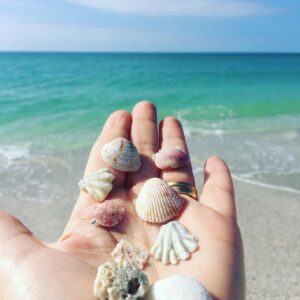
Then get to a shelling beach while the tide is low. Sanibel’s east-west curve acts like a net, catching shells from the Gulf and laying them along the shore by the thousands — it’s why the island is called the Seashell Capital of the World. Bowman’s Beach and Blind Pass (between Sanibel and Captiva) are two of the best spots for whelks, conchs, coquinas, and the occasional prized junonia. You’ll quickly recognize the local pose: the bent-over “Sanibel Stoop” of a serious sheller. Bring a bucket, and remember the rule — no live shelling; if something’s still home inside, leave it.
Mid-Morning: Wildlife at “Ding” Darling
A few minutes away is the J.N. “Ding” Darling National Wildlife Refuge, one of the country’s great birding spots and a highlight of any island visit. The four-mile Wildlife Drive winds through mangroves and tidal flats where you’ll spot herons, egrets, roseate spoonbills, and more, especially around low tide. Entry is around $10 per vehicle, and the visitor center is free.
One important timing note: Wildlife Drive is closed on Fridays, so plan your day trip for another day of the week if the refuge is on your list. If you’d rather be on the water, Tarpon Bay Explorers inside the refuge runs guided kayak and tram tours — a lovely way to see it all at a slower pace.
Late Morning: The Shell Museum & Aquarium
By now you’ve found a pocketful of shells you can’t identify — which makes the Bailey-Matthews National Shell Museum & Aquarium the perfect next stop. It’s the only museum in the country devoted to shells and mollusks, and it’s far more fun than that might sound. The Great Hall of Shells helps you name your beach finds, while the downstairs aquarium gallery has touch pools, live mollusks, and a resident giant Pacific octopus that’s a guaranteed kid-pleaser. Time your visit around a Keeper Chat (held late morning and again mid-afternoon) to hear the aquarists talk through the tanks. Open daily; parking is free.
It’s a genuinely good air-conditioned break in the middle of the day, whatever the weather’s doing outside.
Lunch: Island Flavor
Sanibel’s dining scene has steadily come back, and you’ve got good options depending on your mood. For a classic island breakfast-into-lunch institution, the Lighthouse Café is a longtime favorite. If you’d rather keep it simple and picnic on the beach, Bailey’s General Store has deli items, baked goods, and everything you need to put a beach lunch together.
If you can hold out, though, consider saving your appetite — because the afternoon takes you up to Captiva, where some of the area’s most famous tables are waiting.
Afternoon: Cross Over to Captiva
Drive north along Sanibel-Captiva Road and over the bridge at Blind Pass — pull over at Turner Beach if you want another shot at shelling, as the pass churns up some of the best finds anywhere on the islands (the current here is strong, so it’s better for wading and beachcombing than swimming).
Captiva village is tiny, walkable, and full of character. Wander Andy Rosse Lane, browse the art galleries and beach shops, and soak up the laid-back, old-Florida feel. It’s the kind of place where an afternoon slips by without you noticing.
Sunset: The Grand Finale

Captiva faces west, which makes it one of the best sunset spots in all of Southwest Florida — the perfect way to close out the day before the drive home.
The beachfront Mucky Duck is the legendary choice: a beloved restaurant right on the sand where people gather to watch the sun go down (expect a wait, and know that it’s worth it). For something whimsical and iconic, the famously over-the-top Bubble Room is back and serving — first-come, first-served, so go a little early. Or simply spread a towel on the beach at Turner Beach or the Captiva shoreline and watch the sky put on its show for free.
Then it’s an easy drive back over the causeway to your Cape Coral rental — sandy, sun-tired, and already planning your next island day.
A Sample One-Day Flow
For anyone who likes a plan at a glance:
- 8:00 a.m. — Leave Cape Coral, cross the causeway
- 8:45 a.m. — Shelling at Bowman’s Beach or Blind Pass (low tide)
- 10:30 a.m. — “Ding” Darling Wildlife Drive (not Fridays)
- 11:45 a.m. — Bailey-Matthews Shell Museum & Aquarium
- 1:00 p.m. — Lunch on Sanibel
- 2:30 p.m. — Drive to Captiva; Turner Beach + Captiva village
- 5:00 p.m. — Settle in for sunset
- 6:30 p.m. — Dinner on Captiva, then home
Adjust freely — this is a relaxed framework, not a schedule to race through. The islands are best enjoyed slowly.
Staying with us in Cape Coral? This whole day sits about 45 minutes from your door, which is exactly what makes Cape Coral such a smart home base — island days when you want them, and your quiet canal-side retreat to come home to. Ask us and we’re always happy to share a current tide chart and our latest island recommendations.
Planning more of your trip? See our complete Cape Coral family vacation guide and our roundup of local wildlife you’ll actually see while you’re here.
<!– INTERNAL LINKS TO ADD ONCE LIVE: – “Cape Coral family vacation guide” (Oct pillar post)
Ask any local angler about their favorite time to fish Cape Coral and a lot of them will quietly tell you: fall. The summer heat backs off, the crowds thin out, and the fish — fattened up on a summer’s worth of baitfish — go on the hunt. With more than 400 miles of canals at your doorstep and the rich waters of Pine Island Sound and the Caloosahatchee River a short run away, fall fishing in Cape Coral is about as good as inshore Florida gets.
Here’s what’s biting from September through November, where to find it, and how to make the most of the season — whether you’re casting from your rental’s dock or booking a guide.
Why Fall Is Prime Time
A few things line up beautifully in fall. Cooler mornings make the fish more active and make you more comfortable on the water. The baitfish that hatched in spring have grown big and plump over the summer, so predators are feeding aggressively to bulk up before winter. And the snowbird crowds haven’t fully arrived yet, so the water is quieter. October in particular is a local favorite — often one of the most productive months of the entire year — as redfish school up and move into the shallows. Add in pleasant air temperatures and you’ve got the makings of some of the best fishing days you’ll have all year.
What’s Biting This Fall
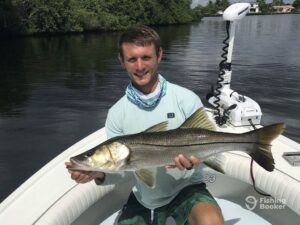
Redfish — the fall headliner. If fall has a star, it’s the redfish. They school up along shorelines and push into the shallow flats and backwaters, and the bigger “bull” reds move into the estuaries this time of year. Look for them around docks, oyster bars, and mangrove edges, and keep an eye out for tailing fish on the flats — sight-fishing a tailing redfish is one of the great thrills of inshore angling.
Snook — fat and feeding. Snook spend the fall fattening up before the cooler months, which makes for a strong bite along mangrove edges, around dock pilings, and at creek mouths and passes. They’re a hard-fighting favorite and abundant throughout the area’s mangrove shorelines.
Spotted seatrout — back on the flats. As the water cools, seatrout get more active, especially in the low-light hours. Work the shallow grass flats early in the morning with live shrimp or soft plastics and you’ll often find them in good numbers.
Tarpon — catch them early. The famous spring and summer tarpon migration is winding down by fall, but early in the season you can still find rolling fish, particularly in the river and around the passes in the evening. By late fall the big ones have mostly moved on — so if a tarpon’s on your list, go early.
The supporting cast. Fall and the start of winter also bring excellent action on mangrove snapper, sheepshead, black drum, jack crevalle, and Spanish mackerel — plenty to keep a line tight on any given day.
Freshwater, too. Don’t forget Cape Coral’s interior. The freshwater canals and lakes (like Lake Kennedy) hold largemouth bass, peacock bass, bluegill, and crappie, and the bass fishing only improves as the water cools through the season.
Where to Drop a Line

Right from your dock. One of the joys of a Cape Coral stay is that the fishing starts at your own seawall. What you’ll catch depends on your canal: a gulf-access (saltwater) canal can produce snook, redfish, snapper, sheepshead, and trout, while a freshwater canal is your spot for bass and panfish. (If you’re not sure which type your rental sits on, our guide to gulf-access vs. freshwater canals breaks it down.) Keep in mind that while fishing off your own rental dock is allowed, public fishing may require permits. Never fish off of someone else’s dock.
The Caloosahatchee River. The brackish reaches of the river hold snook, tarpon, and largemouth bass, with endless structure and depth changes to explore.
The sounds, passes, and flats. A short run gets you to Pine Island Sound, Matlacha Pass, and San Carlos Bay — prime inshore grounds of mangrove islands, oyster bars, and grass flats loaded with redfish, trout, and snook. The waters around Sanibel and Captiva, with their miles of mangroves, are legendary snook territory.
Tips for Fall Success
- Fish the low light. Early morning and the hour before dusk are your best windows — fish feed harder when the sun’s low.
- Work a falling tide. Set up near creek mouths and outflows on a falling tide; gamefish stack up to ambush the bait getting swept out.
- Match the bait. Live pilchards, pinfish, mullet, and shrimp are hard to beat, but soft-plastic jigs and topwater lures shine in fall when fish are aggressive.
- Hunt the structure. Docks, mangrove edges, oyster bars, and seawalls all hold fish — work the edges, not the open middle.
Licenses and the Rules of the Game
Before you cast, two essentials. First, you’ll need the appropriate Florida fishing license — saltwater, freshwater, or both, depending on where you fish (it’s quick to buy online, and most charters include it for their guests). Second, and importantly: fishing regulations here change, and they vary by zone and season. Snook and redfish in particular have specific seasons, size “slot” limits, bag limits, and permit requirements that are updated regularly — and the rules for keeping a fish can differ from one stretch of water to the next.
Because of that, always check the current rules with the Florida Fish and Wildlife Conservation Commission before you keep anything. Many local anglers practice catch-and-release for prized species like snook, redfish, and tarpon anyway — it keeps the fishery healthy for the next season and the next generation. Handle fish gently, keep them wet, and let the big breeders swim off to do their job.
Cast Off Right From Your Dock
You don’t need a boat of your own to have a great fall on the water. Many local guides will pick you up right at your rental’s dock, and Cape Coral’s calm canals and short runs make it one of the most family-friendly places around to put a kid on their first fish. Whether you’re a serious angler chasing a personal-best redfish or a family looking for a fun morning with something always willing to bite, fall is the time and Cape Coral is the place.
The Bottom Line
Cooler mornings, hungry fish, and quiet water make fall one of the best-kept secrets of the Cape Coral fishing calendar. Grab your license, check the current regulations, pick your tide, and get out there — the redfish are waiting.
Staying with us this fall? Many of our rentals put a dock and a fishing spot right outside your door. Reach out and we’ll help you find a home that fits your fishing plans — and point you toward the guides and ramps nearby.
Keep planning: learn the difference between gulf-access and freshwater canals (it determines what you’ll catch from your dock), see the local wildlife you’ll spot on the water, and browse more things to do while you’re here.
Picture Christmas morning in shorts and bare feet, coffee on the lanai, the water glassy and the sun already warm. Picture a Thanksgiving where the whole family spills out around the pool instead of crowding indoors against the cold. That’s the holidays in Cape Coral — a warm, sunny, gently festive escape from gray skies and shoveled driveways, with palm trees in twinkle lights and boats decked out like floating Christmas trees.
If a warm-weather holiday sounds like exactly what your family needs this year, here’s what makes Cape Coral such a special place to spend it — and why, if you’re thinking about a Cape Coral Christmas rental, now is the time to lock it in.
Why Spend the Holidays in Cape Coral?
The appeal starts with the obvious: the weather. While much of the country bundles up, Cape Coral’s late-November and December days are typically mild and sunny — comfortable enough for the beach, the boat, and the pool, with cool, pleasant evenings perfect for a sweater and a sunset. It’s the holidays without the cold, which for a lot of families is the whole point.
Then there’s the togetherness. The holidays are about gathering, and a private rental home gives a family room to actually do that — separate bedrooms for everyone, a full kitchen for the big meal, a pool and a dock out back, and space to be together without being on top of each other. It’s the kind of holiday where the cousins swim while dinner’s in the oven and everyone watches the sunset from the seawall. Try fitting that into a couple of hotel rooms.
A Cape Coral Holiday Is a Warm One

Don’t expect snow — expect a different kind of magic. Holiday lights look even prettier reflected in the canals, and many families fall in love with the novelty of a beach day on Christmas afternoon. You can spend the season boating, fishing, kayaking, or simply soaking up the sun, then come back to a cozy, decorated home in the evening. And because winter is manatee season in Southwest Florida, you might even share your holiday with a gentle giant drifting past the dock.
Festive Traditions You Can Build a Trip Around
Cape Coral does the holidays with genuine local charm, and a few signature events are worth planning your visit around. Exact dates shift each year, so check the city’s events calendar as you plan — but here’s what to look forward to:
The Holiday Boat-A-Long is the one you can’t see just anywhere. Held at Four Freedoms Park overlooking Bimini Basin, usually on a Saturday shortly before Christmas, it’s a parade of boats decked out in lights, inflatables, and full holiday themes, cruising through the basin and the South Cape canals as families watch from the shoreline with chairs and blankets. The evening wraps with food trucks, live music, a visit from Santa, and a movie in the park. A holiday parade on the water is a quintessentially Cape Coral experience — few places in the country can pull it off.
The Holiday Festival of Lights is the city’s biggest holiday celebration, a downtown tradition on Cape Coral Parkway going back more than 40 years. Typically held on an early-December Saturday, it draws tens of thousands for the tree lighting, live entertainment, kids’ zones, artisan vendors, food, and photos with Santa. It’s free, festive, and a wonderful way to kick off the season.
Holiday Village at Jaycee Park is the family-favorite, with crafting, gingerbread decorating, Santa visits, and easygoing seasonal fun in a pretty waterfront park.
And the festivities don’t stop at the city line. Nearby Fort Myers adds even more, from glowing holiday light trails at the Calusa Nature Center to a decorated, walkable downtown — all an easy drive from your rental.
Thanksgiving in Cape Coral
Thanksgiving here trades the cold for the outdoors. Many families cook the feast in their rental’s full kitchen and eat by the pool, or skip the cooking entirely — a number of local restaurants serve Thanksgiving dinner if you’d rather not lift a finger. Either way, the long weekend is a beautiful time to be on the water: warm, uncrowded compared to the deep-winter peak, and a gentle, grateful way to start the season. It’s also the unofficial kickoff to snowbird season, so the city begins to hum back to life.
Why Book a Rental for the Holidays
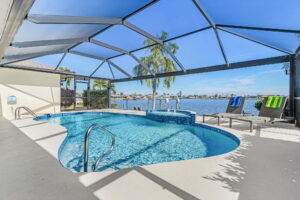
A vacation home simply fits a family holiday better than a hotel. You get the kitchen for the turkey and the cookies, the dining table for everyone to gather around, the pool and dock for the kids, room for visiting relatives, and the comfort of a real home to decorate and relax in. It’s the difference between visiting somewhere for the holidays and living the holiday somewhere warm.
Book Early — The Holidays Fill Fast
Here’s the practical part, and the reason we’re talking about December back here in late summer: the holidays are peak season in Southwest Florida, and the best rentals — especially the waterfront homes with pools that families want for the holidays — get reserved months in advance. Thanksgiving and the stretch from mid-December through New Year’s are the first dates to go. If you have your heart set on a particular home, particular dates, or simply want the best choice of properties, booking early in the year is by far the smartest move. Wait until fall and you’ll be choosing from what’s left.
The Bottom Line
A Cape Coral holiday is sunshine instead of snow, a whole house instead of cramped rooms, boats in twinkle lights, and the whole family together on the water. If that’s the holiday you want this year, the only catch is timing — the best homes book early, so the sooner you reserve, the better your season.
Dreaming of a warm holiday on the water? Reach out with your dates and your family’s wish list, and we’ll help you find the perfect home for Thanksgiving, Christmas, or a sunny New Year — before the calendar fills up.
Plan the rest of your trip: see our guide to the best things to do while you’re here, and where to spot manatees during your holiday stay.
When you’re booking a waterfront home in Cape Coral, it’s easy to assume “on a canal” means one thing. It doesn’t. With more than 400 miles of canals — the most of any city in the world — Cape Coral actually has two very different kinds of waterfront, and which one you book shapes your entire trip. Pick the right canal for how you like to spend time on the water, and you’ll love your stay. Pick the wrong one, and you might arrive with a boat you can’t get to the Gulf, or a quiet paddling spot when you wanted island-hopping.
Here’s a plain-English guide to the difference, written for renters rather than home-buyers, so you can book the perfect gulf-access Cape Coral rental — or decide that a freshwater canal is actually the better fit for your trip.
Why the Canal Type Matters for Your Stay
The word “waterfront” hides a lot. Two homes can both sit on a pretty canal, both have a dock out back, and offer completely different experiences. One lets you idle out to Sanibel for lunch; the other dead-ends in a peaceful freshwater system perfect for kayaks but with no route to the Gulf at all. Neither is “better” — but they’re built for different vacations, and the listing label alone won’t always make the difference obvious. That’s why a few minutes of understanding (and a couple of questions to your host) pays off.
Gulf-Access (Saltwater) Canals
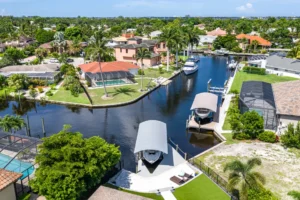
A gulf-access canal connects, by some route, to the Caloosahatchee River and out to the open Gulf of Mexico. This is the classic Cape Coral dream: keep a boat at your private dock and run out to Fort Myers Beach, Sanibel, Captiva, and the islands without ever trailering. These are saltwater canals, so they’re also where you’ll spot dolphins year-round and manatees in the cooler months, drifting right past the seawall.
If you plan to bring a boat, rent one, or book fishing and island trips from the house, this is the type you want. A couple of things to understand, though, because “gulf access” isn’t one-size-fits-all:
Direct vs. indirect access. Direct (or “sailboat”) access means no fixed bridges between the dock and the river — it works for any boat, including tall vessels and sailboats. Indirect access means you’ll pass under one or more low fixed bridges (sometimes around nine feet) on the way out, which limits how tall a boat can make the trip. If you’re bringing your own boat, this matters enormously — confirm the route fits your boat before you book. This Gulf Access & Bridge Height map can be helpful!
Travel time varies a lot. This is the big one renters miss: a home advertised as “gulf access” can still be anywhere from a few minutes to 30–45 minutes of idling from open water, depending on its location in the canal network. If a quick run to the Gulf is the dream, ask your host how long the boat ride actually takes.
Gulf-access homes are the premium product, so they generally rent at higher nightly rates — you’re paying for that direct line to the water.
Freshwater Canals
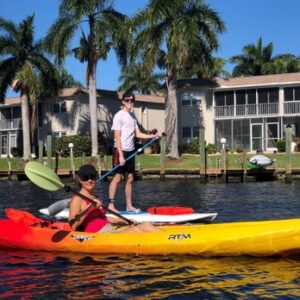
Freshwater canals are the quiet secret of Cape Coral. These are interior, landlocked waterways — mostly in the northeast and parts of the northwest of the city — that don’t connect to the river or the Gulf. Instead, they form a calm, closed system of canals and lakes fed by rain.
What you give up is saltwater boating and the run to the islands. What you get is genuinely lovely: serene, wide water views, much less boat traffic, and excellent calm-water recreation. Freshwater canals are ideal for kayaking, paddleboarding, jet skis, and small boats, and the fishing is fun in its own right — bass, tilapia, and other freshwater species. Some freshwater stretches open onto big, wide lakes with gorgeous views you won’t find on a narrow saltwater canal.
A few honest notes: you won’t see dolphins or manatees on a freshwater canal (those are saltwater animals), and alligators are more commonly spotted in freshwater systems — another good reason to admire the water rather than swim in it (more on swimming below). The upside for your wallet is real, though: freshwater-canal homes typically rent for noticeably less than comparable gulf-access homes, so they’re the value pick if a boat to the Gulf isn’t your goal.
Which One Is Right for Your Trip?
It comes down to a single question: what do you actually want to do on the water?
Choose a gulf-access (saltwater) rental if you want to bring or rent a boat, reach the Gulf and the islands from your dock, fish in saltwater, or watch for dolphins and manatees. It’s the right call for serious boaters and anyone whose vacation centers on getting out to open water.
Choose a freshwater rental if you mainly want beautiful water views, calm paddling, jet-skiing or small-boat fun, freshwater fishing, and a quieter, more private setting — at a friendlier price. For a lot of families and relaxers, this is plenty of waterfront, and the savings free up budget for other things.
The Questions to Ask Before You Book
A quick message to your host clears up almost everything. Before you book a waterfront rental, ask:
- Is the canal gulf-access (saltwater) or freshwater? The single most important question.
- If it’s gulf access, is it direct or indirect — and are there any fixed bridges or a lock on the route? Essential if you’re bringing a boat, since this sets the maximum boat height.
- How long is the boat ride from the dock to open water? So “gulf access” matches your expectations.
- Is there a dock, and a boat lift? And can you tie up your own boat, or is one available?
- If you don’t have a boat, where’s the nearest boat ramp or rental? Handy for freshwater stays too.
Any good host will happily answer these — and the answers tell you instantly whether a home fits your plans.
One Honest Note on Swimming
Because people often picture diving off the dock: Cape Coral’s canals generally aren’t meant for swimming. Freshwater canals can have alligators, and saltwater canals have boat traffic and murky, current-moved water. The water here is for boating, paddling, fishing, and wildlife-watching — and for swimming, you’ll want the home’s pool or a Gulf beach a short drive away. It’s not a drawback, just worth knowing so the layout of your trip matches reality.
The Bottom Line
In Cape Coral, “waterfront” is a spectrum, not a single thing. If life on the water means a boat at your dock and the Gulf at your bow, book a gulf-access home and confirm the route fits your boat. If it means peaceful views, easy paddling, and a better price, a freshwater canal may be exactly right. Match the canal to how you’ll actually spend your days, and the water becomes the best part of your whole trip.
Not sure which canal fits your plans? Just ask us. Tell us how you picture spending time on the water — boating to the islands, kayaking at sunrise, or simply sipping coffee with a view — and we’ll point you to the right home for your stay.
Keep planning: see our guide to the things to do once you’re here, and the local wildlife you’ll spot from the water.
If you’re choosing a winter base in Southwest Florida, you’ve probably narrowed it down to the big three: Cape Coral, Naples, and Fort Myers. They sit within about 40 minutes of each other, share the same gorgeous climate, and all draw snowbirds by the thousands every winter. So why do so many seasonal visitors keep choosing Cape Coral?
The honest answer is that none of these places is “better” in the abstract — they’re built for different priorities. But for a particular kind of snowbird, the one who wants space, water, value, and an unhurried pace, Cape Coral hits a sweet spot the other two can’t quite match. Here’s a fair look at how they compare, including where Naples and Fort Myers genuinely win, so you can decide what fits you.
More Vacation for Your Money
Let’s start with the one that matters to almost everyone: cost. Cape Coral simply stretches a budget further. As of early 2026, the median home price in Cape Coral sits around $375,000, compared to roughly $670,000 in Naples — and that gap shows up just as clearly in seasonal rentals as it does in real estate.
What that means in practice: in Cape Coral, your winter budget tends to get you a private single-family home with a heated pool and a canal out back. The equivalent money in Naples more often gets you a condo, frequently with hefty HOA fees attached (coastal Naples condo associations commonly run several hundred dollars a month). For snowbirds who want room to spread out, host visiting kids and grandkids, and live like they’re at home rather than in a hotel, the value equation tilts hard toward Cape Coral. Fort Myers lands somewhere in the middle — more affordable than Naples, but without Cape Coral’s waterfront-home-for-the-price advantage.
The Water Is the Whole Point
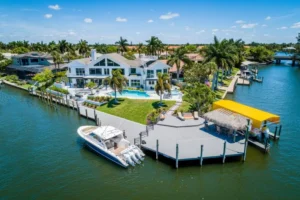
This is the big one, and it’s where Cape Coral is in a league of its own. The city is laced with more than 400 miles of navigable canals — the most of any city on earth — so a huge share of its homes come with a private dock and direct or near-direct access to the Gulf.
For a snowbird who boats, fishes, kayaks, or just wants to sip coffee watching dolphins and manatees drift past the seawall, that’s the dream: your boat is thirty feet from your back door, no marina, no trailer, no hassle. Neither Naples nor Fort Myers offers this at anything like the same scale or price. Naples has beautiful (and very expensive) waterfront, and Fort Myers has lovely river estates and marina communities, but neither has a residential canal network where waking up on the water is the norm rather than a luxury splurge. If life on the water is why you come to Florida, this single factor is why most water-lovers choose Cape Coral.
Space, Quiet, and an Easy Pace
Cape Coral was built as a residential city, not a resort strip, and you feel it. Big lots, wide quiet streets, low density, and a calm, safe, suburban feel make it one of Florida’s most livable large cities — peaceful, almost by design. For snowbirds who spent decades in busy places and want their winters to feel restful, that tranquility is a feature, not a shortcoming.
It also stays noticeably less hectic in peak season. Naples in February is glamorous but crowded and pricey; Cape Coral, even at its busiest, keeps a slower, more neighborly rhythm. You’re staying in a real community, not a tourist zone.
A Central Home Base for Everything Else
Choosing Cape Coral doesn’t mean giving up everything the others offer — it means having them within reach. From a Cape Coral base you’re a short drive from the world-class beaches and shelling of Sanibel and Captiva, the walkable River District and cultural scene of Fort Myers, and even Naples itself for a day of upscale shopping and dining. You get the quiet home base and the day trips. Many snowbirds find that the ideal setup is to live affordably and peacefully in Cape Coral and simply visit the pricier attractions when the mood strikes.
Where Naples Genuinely Wins
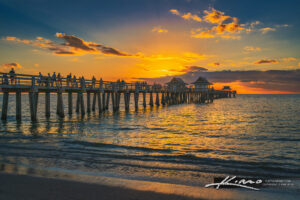
To be fair, Naples earns its premium, and it’s the better choice for some snowbirds. If your idea of a perfect winter is walking to the beach, fine dining on Fifth Avenue South, browsing art galleries and luxury boutiques, and teeing off at a private golf club, Naples delivers a polished, world-class version of that lifestyle that Cape Coral doesn’t try to match. It also has a slight edge in access to top-tier specialized healthcare. Naples is consistently ranked among the best places to retire in Florida by U.S. News & World Report, and for good reason. If beaches-at-your-doorstep and upscale refinement top your list and budget isn’t the deciding factor, Naples may be your place.
Where Fort Myers Genuinely Wins
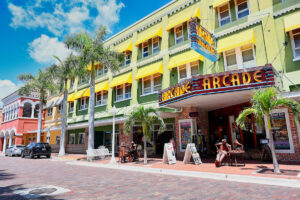
Fort Myers makes a strong case too, especially if you want more buzz than Cape Coral offers. Its historic downtown River District is the most genuinely walkable neighborhood in the region — restaurants, bars, art walks, and live music steps from your door. It has real cultural depth (the Edison & Ford Winter Estates, theaters, an arts scene) and is the area’s hub for spring training baseball, a huge draw for snowbirds in February and March. It’s also closest to the Southwest Florida International Airport (RSW) and home to the region’s major hospital campuses. If walkability, culture, and convenience rank above space and a private dock, Fort Myers might fit you better.
The Bottom Line for Snowbirds
Here’s the honest summary. Choose Naples for beaches and luxury, Fort Myers for walkable downtown energy and convenience — and Cape Coral for space, water, value, and calm.
For the large group of snowbirds whose priorities are a private waterfront home, room to relax, an easy boating-and-wildlife lifestyle, and a budget that goes further, Cape Coral isn’t a compromise — it’s the best fit on the coast. That’s why so many people who try it here come back to the same canal every winter.
Thinking about a winter on the water in Cape Coral? We’d love to help you find the right home base for your season. Reach out with your dates and what you’re looking for, and we’ll point you toward the neighborhoods and rentals that fit, or take a look for yourself.
Plan your stay with our other guides: what to know about gulf-access vs. freshwater canals, and the things to do and wildlife to see once you’re here.
<!– INTERNAL LINKS TO ADD ONCE LIVE: – “book a Cape Coral winter rental” → Snowbird booking guide (Jul) – “gulf-access vs. freshwater canals” → Gulf-access canals post (Aug)